









Prevention of Avian Influenza - Tips for Food Safety
Raw poultry meat and poultry eggs may be contaminated by bacteria or viruses such as salmonellas or avian flu virus. The mainstay of prevention lies with thorough cooking, which can kill bacteria and viruses in food. According to the World Health Organization, there is no evidence that properly cooked poultry or eggs can be a source of infection. Therefore, the risk of contracting avian flu could be reduced by thorough cooking of poultry meat and poultry eggs.
As a general precautionary measure, the public are advised to observe good personal, food and environmental hygiene at all times. The following safety tips are useful:
Purchase
Avoid touching chickens or their faeces when buying live chickens. Do not blow their vent. 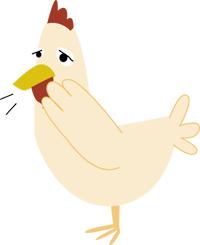
Handling
After handling live poultry, poultry products or eggs, wash hands thoroughly with soap or liquid cleanser.
Clean thoroughly all working surfaces, utensils and equipments that have been used for handling poultry products or eggs.
Use separate knives and chopping boards to handle raw food and ready-to-eat food.
Keep raw poultry meat in well covered container and then store it in the lower compartment of refrigerator. Keep ready-to-eat and cooked food in the upper compartment to avoid cross-contamination.
Wash eggs (with household detergent if required) if they are soiled with faecal matter or stained with dirt. Washed eggs should be consumed immediately.
Avoid consuming eggs with cracked shell as they are prone to be contaminated.
Consumption
Do not use raw or undercooked eggs for preparation of food that will not be cooked further.
Do not eat raw eggs or dip cooked food into any mixed sauce of raw eggs. Cook eggs thoroughly until the white and the yolk become firm.
Cook poultry thoroughly before consumption. The centre of poultry meat should reach 70oC continuously for at least two minutes.
If there are pinkish juices running from the cooked poultry or the middle parts of the bones are still red in colour, cook the poultry again until fully done.
The Avian Influenza Cycle
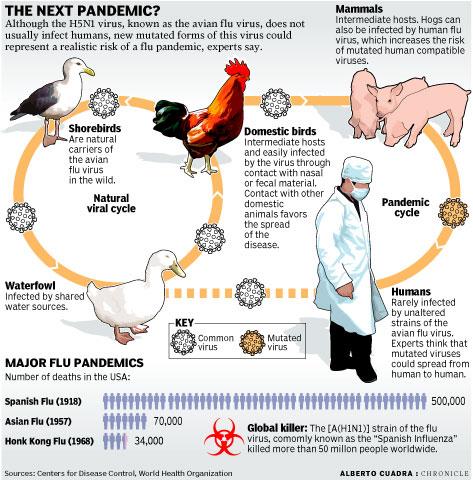
The picture from http://influenzapandemic.blogspot.com/2005_05_01_influenzapandemic_archive.html
Resource form the Center for Food Safety